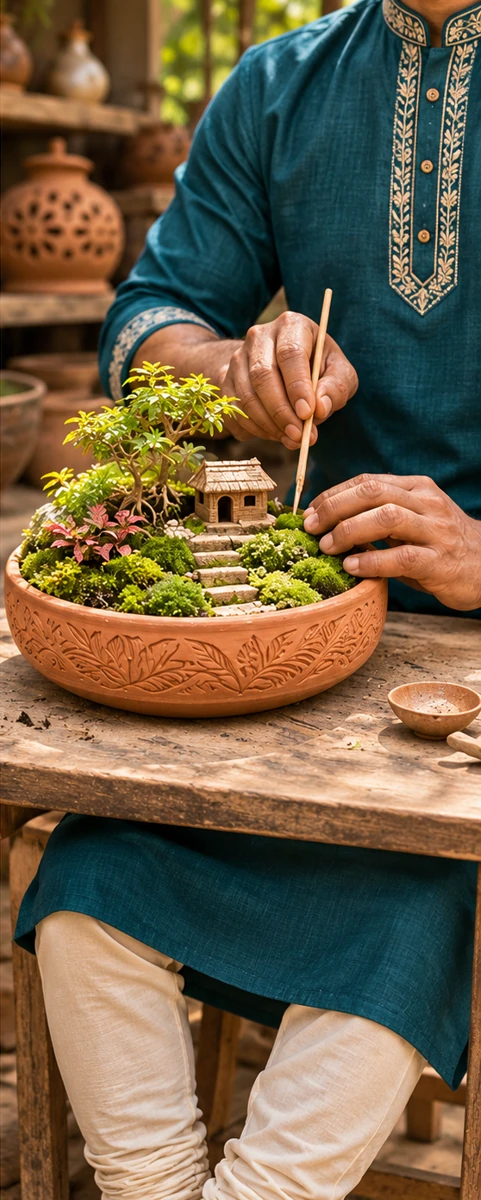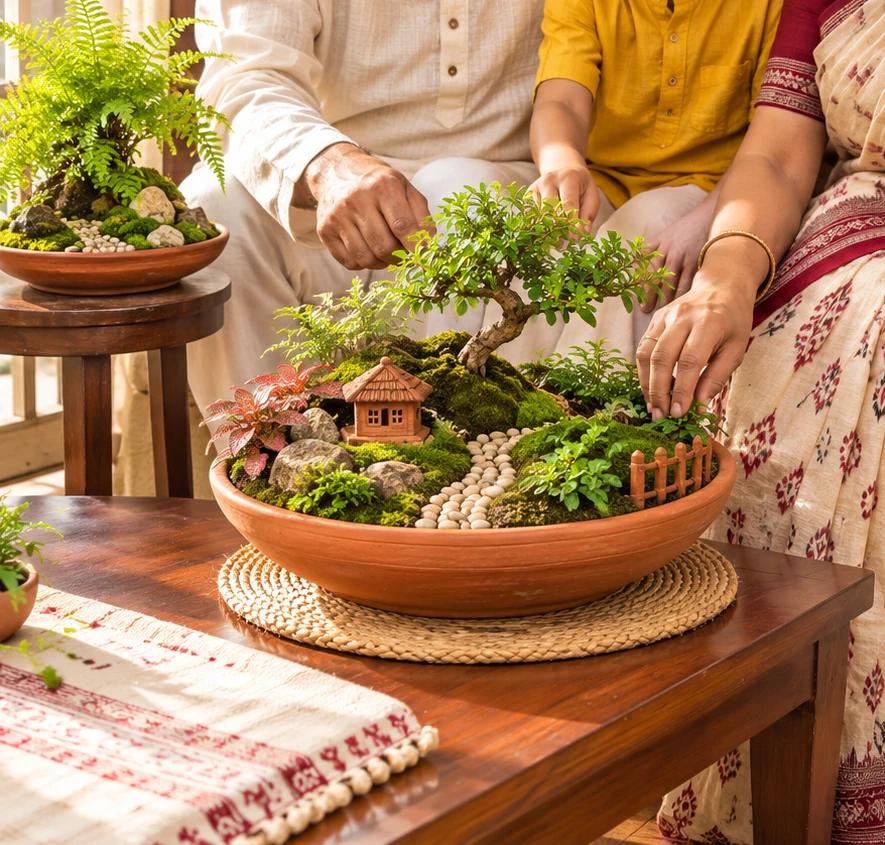
Matikalpa makes living miniature gardens in handcrafted bowls. Each piece brings together a vessel made by hand and a planted composition with its own shape, colours and textures. A shallow terracotta bowl might hold a little landscape of moss, stones and a curving path. Another might bring together compact succulents with contrasting leaf shapes and a quiet stretch of gravel. Designed in Odisha by artistic professionals, these pieces bring the detail of a larger garden into a form that fits naturally on a shelf, a console or another carefully chosen spot at home.
The name Matikalpa expresses our idea of earth shaped by imagination. Clay carries the touch of the maker, and planting gives the finished piece a character that continues to develop. We use that connection as the starting point for every design. The vessel, the planting, the arrangement of stone and the space between them all contribute to the finished work. Look closely and you might see a trail disappear around a rock, a fern lean over the edge of a clearing or the grain of the clay catch the afternoon light.
Handcrafted in Odisha
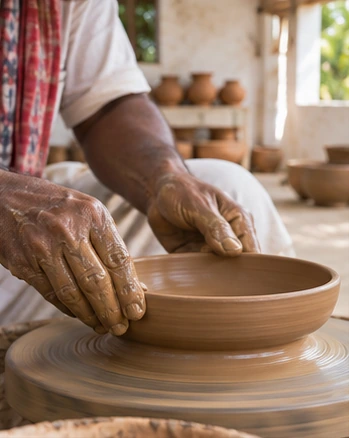
Odisha is home to many traditions of making objects by hand, and clay remains a familiar material in everyday life. Matikalpa draws inspiration from the care that goes into an earthen vessel, from the curve of its rim to the marks a maker leaves on its surface. Our gardens carry that sensibility into contemporary home décor. An earthen colour, a restrained pattern or the simple profile of a bowl gives an individual piece a sense of place without crowding the plants it holds.
There are many ways for a handcrafted object to show where it comes from. A useful form can reflect years of practical knowledge about balance, proportion and materials. A repeated line may feel different each time it is drawn, and the same clay may show changes in tone across a single surface. Matikalpa values these details because they connect the finished garden to the people who worked on it. An Odisha-made piece can feel equally at home in a room filled with familiar earthen objects or in a simple contemporary interior.
Designed by artistic professionals
The design begins with a question about how the finished piece should feel in a room. A quiet moss garden calls for different decisions from a colourful composition of succulent rosettes. Our artistic professionals consider the view from above, the silhouette at eye level and the way the vessel sits on a surface. They work with scale, paying attention to how a small plant, a single stone or a strip of open soil can make a layout feel balanced. The strongest composition often comes from changing several small details in relation to each other.
The maker and the planting designer each bring a different kind of judgement. The first considers how the bowl will feel, sit and frame the landscape. The second considers the light, the growth habits of the plants and how their forms will read alongside the clay. A spreading plant can lead the eye across the bowl, while a taller one can give the composition a clear point of interest. The finished piece depends on those choices working together. Design continues through the actual placement of each element, since a real leaf or stone rarely has the exact shape anticipated in a sketch.
Why every piece is unique
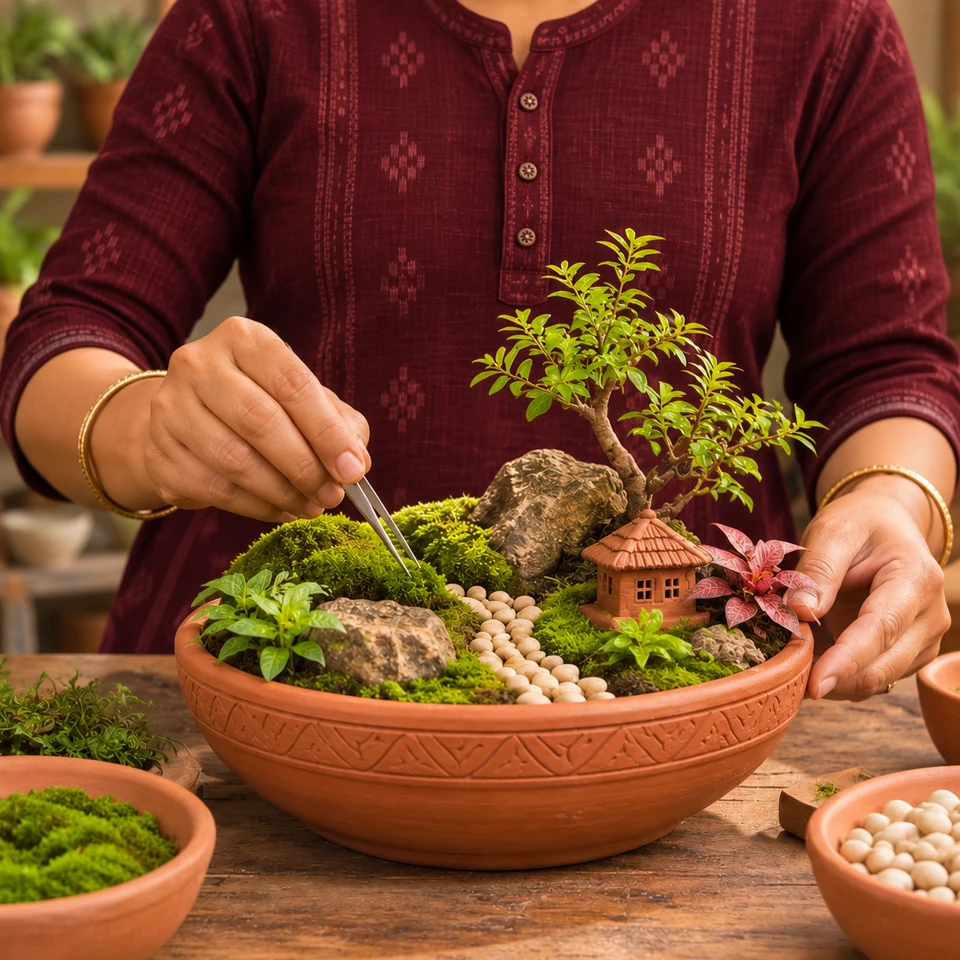
Each Matikalpa design develops around the materials available for that piece. Two stones from the same selection can differ in colour, texture and angle. Two plants of the same variety may face in different directions or take up very different amounts of space. Even when a design uses a familiar vessel shape, the thickness of a rim, the finish of the surface and the contours of the planting give the finished garden its own appearance. The maker responds to those differences as the composition comes together.
A collection may bring together pieces with a shared mood, such as low moss landscapes or arrangements with sculptural succulents. Within that collection, each garden has its own proportions and planting. A pebble path can run straight through one composition and bend around a mound in the next. A cream bowl can make the deepest greens stand out, while a terracotta vessel can echo the colour of a stone or the warm tips of a leaf. The shared idea gives the collection continuity. The details are what give an individual garden its character.
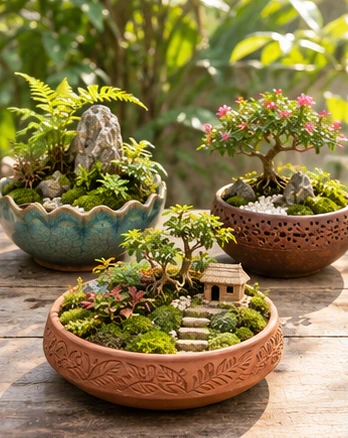
The bowl is part of the landscape
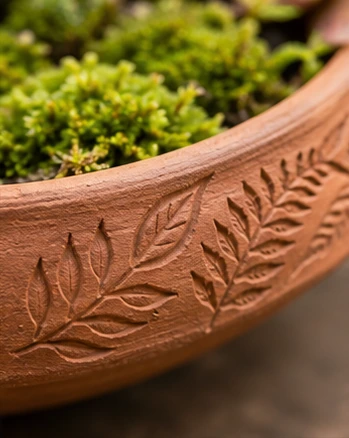
In a bowl garden, the vessel establishes the scale of everything inside it. A wide, shallow form gives room for open ground and low planting. A narrower profile can make an upright plant feel especially expressive. A textured surface can pick up the grain of a rock or the pattern of fine leaves. The vessel also matters from a distance, where its silhouette and colour may catch the eye before the finer details of the landscape come into view.
Clay and foliage change with the light. Natural terracotta may appear warm in the morning and deeper in the evening. A glazed surface catches reflections differently from a matte one, and a ribbed edge puts small bands of shadow around a simple shape. These effects matter in a home where a garden may be seen from the doorway, then examined more closely over a cup of tea. We consider both views. The piece should have a clear presence on its own and enough detail to reward a closer look.
A garden in miniature
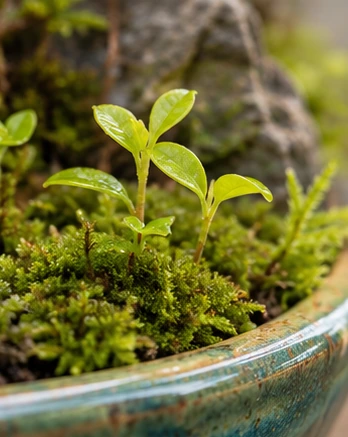
A miniature landscape gives familiar plants a different setting. Moss can suggest a field or the floor of a cool woodland. A small rock becomes a ledge when it rises from low planting, and a handful of pale pebbles can mark the beginning of a path. The effect comes from proportion. We consider where to leave space and where to bring elements close together, so the viewer can follow a line through the garden and find something new at the other end. The result can feel expansive even though it occupies a small footprint.
Matikalpa’s gardens take several forms. Moss compositions often emphasise low, continuous greenery with stones and pockets of open ground. Succulent compositions can bring together rosette shapes, upright growth and changes in leaf colour. Miniature landscapes may suggest a grove, a rocky hillside or a path through ferns. These are starting ideas for the design, and the plants themselves help determine what the garden becomes. A strong stem or an unusual root shape can shift the focus of a piece and lead to a more interesting arrangement than the original plan.
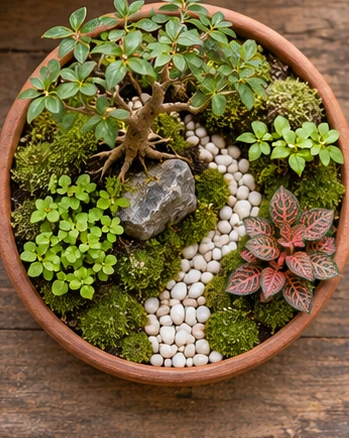
Made with attention to proportion
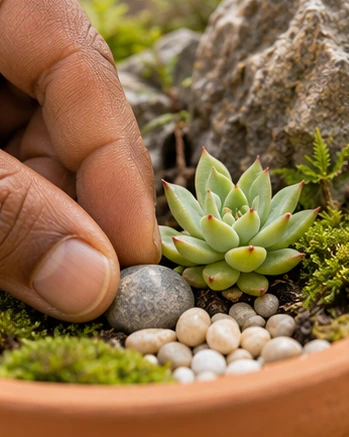
Working at a small scale makes every object in the bowl more noticeable. A stone placed a little too far forward can hide the base of a plant, while a slightly lower mound can open a view through the planting. We assess the composition from several directions as it takes shape. A piece intended for a central table may offer interesting views all the way round. One designed for a shelf can have a more pronounced front, with a taller element at the back and the finer details grouped where they are easiest to see.
Colour also has a role in guiding the eye. Several shades of green can carry an entire design when the forms and surfaces differ enough. A pale gravel line can give a dark arrangement definition, while a small patch of purple or red can help connect separate groups of plants. A restrained palette lets the texture of moss, clay and stone show clearly. A brighter garden can be just as coherent when the colours repeat in a few places and the bowl gives them a calm setting.
Choosing a place at home
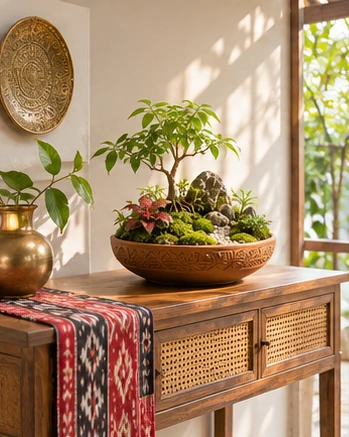
A living bowl garden can sit beside familiar things on a console, a work desk or a shelf. It is often easiest to appreciate where you see it regularly as the light changes. From across a room, the outline and colour of the vessel give the piece presence. Up close, the planting offers smaller points of interest. A small garden can complement a room with many patterns or materials, and it can add a natural detail to a space with plain furniture and limited decoration.
Light should guide the choice of position alongside the way the piece looks. A bright room can have darker areas, and a ledge that seems inviting in winter may become hot in direct summer sun. Different plants respond differently to these conditions. It helps to start with a position that suits the plants in the individual arrangement and check how they respond over time. The best place is where the piece can be enjoyed regularly and where its planting can settle into the light and air available in the room.
Living plants change over time
A planted bowl continues to develop in your home. New leaves may open towards the light, trailing growth can soften a rim and a previously small plant can become the centre of the composition. Seasonal changes in colour and growth are part of living with the piece. Looking closely from time to time can make those developments easier to notice. A garden that changes gradually can become more familiar and more personal as you learn the shapes and habits of the plants inside it.
Care depends on the plants and the way the garden is planted. Moss, ferns and succulents have different needs, so follow the guidance for the individual arrangement when deciding on light and watering. The size of the bowl, the growing medium and the room’s conditions can all affect how quickly moisture changes. A few observations, such as how the leaves look or how the surface feels between waterings, can help you become familiar with the garden. A simple care routine is easier to build around the specific plants than around a fixed schedule for every bowl.
A handcrafted piece to give
A miniature garden can be a personal gift for a housewarming, a celebration or a quieter occasion that calls for something made with care. One person might enjoy the compact shape of a succulent arrangement. Another might be drawn to the small details in a moss landscape or to the warmth of a terracotta vessel. Choosing a piece for someone gives you a chance to think about the light in their home, the colours they like and the kind of plants they enjoy living with.
The fact that each piece is individually composed gives it a story worth sharing with the recipient. The bowl might carry the marks of its making, or the garden might open around a stone whose shape suggested the entire design. Over time the recipient may notice a plant growing into a gap or a new leaf changing the silhouette. The object carries the decisions of its makers, and living with it adds another layer of detail that develops in its new home.

Rooted in the work of making
The time spent on each arrangement shows in decisions that may look simple once the garden is complete. A path follows the slope of the planting, a rock sits comfortably in its surroundings and a plant has room to show its natural form. Good craftsmanship also means knowing when the piece is complete. An open patch of soil or gravel can give the surrounding plants room to stand out. Leaving that space takes the same attention as placing an object in it.
Matikalpa brings together the sensibility of handcrafted Odisha home décor and the pleasure of tending living plants. The work starts with familiar materials and the observations of artistic professionals who use them to create something individual. A finished bowl may remind you of a shaded garden corner, a sunny rock garden or a view along a little path. Its appeal can also come from the way an ordinary green leaf sits against clay in the light. That closeness to the materials, and the chance to see them change as you live with the piece, is what we want each Matikalpa garden to offer.